Waterfronts hold powerful emotional and visual appeal. JTP’s approach to waterfront regeneration unlocks the potential of vacant docklands, redundant wharves and underused riverfronts, turning them into inclusive, lively places that celebrate their connection to water.
Waterfront Regeneration

FAQs
Waterfront sites offer exceptional potential – the combination of waterfront views, animation and natural amenity is one of the most powerful value drivers in residential and mixed-use development. JTP maximises this potential through careful masterplanning: optimising orientation and aspect to capture water views, designing intimate and well-enclosed public spaces along the waterfront edge, and creating a mix of uses that animates the waterfront at all times of day.
Flood risk is the most significant technical constraint on waterfront developments and one that shapes the masterplan from the earliest stages. Waterfront sites require a careful approach to floor levels, drainage strategy and the design of the public realm and waterfront edge. Each of these must be developed in close consultation with the Environment Agency and local planning authority.
JTP’s masterplans integrate resilience measures into the design from the outset. We use level changes to create distinctive public spaces, incorporating sustainable drainage into landscape design, and positioning ground floor uses strategically. We treat resilience as a design opportunity rather than a constraint to be minimised. This is an approach we bring to every waterfront project from the outset. At Crown Wharf in Newham, JTP’s designs included a new flood defence wall safeguarding the site for future flood levels, with a new intertidal terrace which provides marine ecological and amenity benefit through soft landscaping.
Successful waterfront places are activated by a diverse mix of uses – retail, leisure, hospitality, residential and commercial. These help to generate activity and footfall throughout the day and evening establishing an all-day economy. Equally important is how the waterfront edge is designed and accessed. Public access to the water – through generous promenades, active ground floor uses and well-connected routes from the wider neighbourhood – is fundamental to creating a place that feels inclusive and connected.
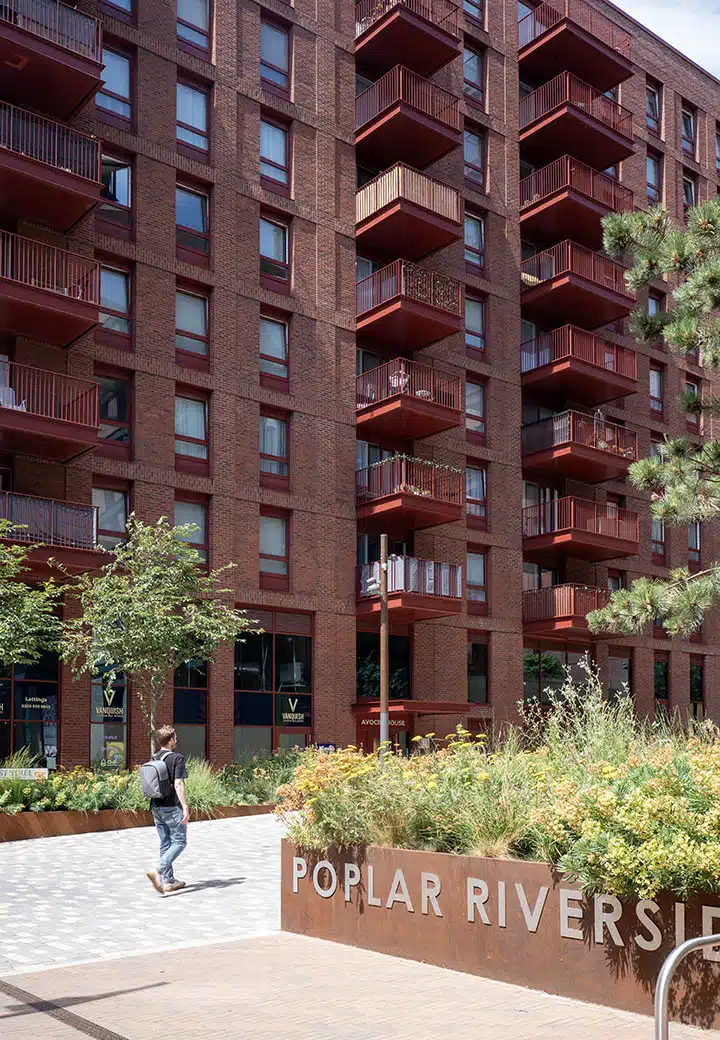
JTP work closely with clients and their commercial advisors to develop a mix of uses that is both viable and establishes a sense of place and identity. We design waterfront edges that maximise public access and activity, ensuring the water becomes an asset for the wider community. Our designs at Poplar Riverside open up the River Lea with the delivery of 220m of new waterside walkways, reconnecting the local community to the water and enhancing public access.
Waterfront sites offer significant development potential and JTP has the experience to unlock it, even where complex infrastructure is present. We work collaboratively alongside utility companies, rail and port operators from the earliest stages of masterplanning, turning operational constraints into design opportunities rather than obstacles.
Our early engagement ensures infrastructure requirements are embedded into the masterplan from the outset. This protects the project programme and avoids costly design changes, giving clients and investors’ confidence in a deliverable project.
JTP has an extensive track record in waterfront regeneration across the UK and internationally. We understand how to turn the unique qualities of waterfront sites – the orientation, outlook and relationship with water – into a compelling placemaking proposition. This drives value, attracts investment and creates places that communities are proud of. Our waterfront portfolio demonstrates the breadth and depth of our experience – from large-scale urban riverside regenerations at Beckton Riverside and Poplar Riverside, to residential-led schemes at Fulham Reach, Kew Bridge and internationally on the Sochi Coastline in Russia.